
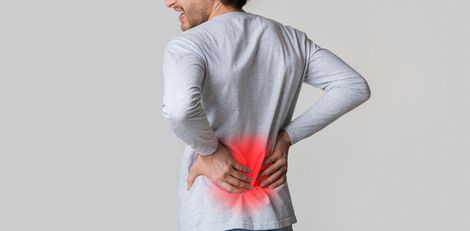
For most people, lower back pain is not serious and improves within a few weeks. However, if your pain is severe, long-lasting, or worsening, consult a healthcare professional before exercising.
How to Start Safely
– Begin slowly and increase intensity gradually.
– Start with cat-cow and good mornings, doing 10 repetitions, once or twice a week.
– Choose seated or standing versions based on comfort.
– As exercises feel easier, add one stretch and one strengthening move at a time.
– Stop immediately if you feel sharp or increasing pain.
Tip: A yoga mat on a firm floor is ideal. Carpet works if a mat isn’t available.
Warm-Up Exercises
Seated or Standing Trunk Rotations
– Sit or stand upright with arms crossed over your chest
– Keep hips facing forward
– Slowly rotate right, return to center, then left
– 10 reps each side
High Knees
– Stand upright
– Slowly lift one knee at a time as high as comfortable
– 10 reps per leg
– Hold a chair for balance if needed
Standing Side Bends
– Stand with feet shoulder-width apart
– Slide one hand down your leg while bending sideways
– Return to center and switch sides
– 10 reps each side
Standing Back Stretch
– Slowly bend forward, rounding your back
– Let arms hang and relax
– Return slowly to standing
– 5 repetitions
Stretching Exercises for Lower Back Pain
– Seated or Floor Cat-Cow – improves spinal mobility
– Knee Rolls – releases tension in the lower back
– Knee Hugs – gently stretches the spine
– Upward-Facing Dog – stretches the front of the body and spine
Hold each stretch for 1–5 seconds, breathing steadily.
Core Strengthening Exercises
Strong core muscles support your lower back:
– Seated or Standing Good Mornings – hinge at hips, keep back straight
– Pelvic Lifts (Hip Thrusts) – activate glutes and core
– Standing Trunk Rotations (Arms Extendnded) – improve rotational strength
– Superman Exercise – strengthens back and glute muscles
Perform 10 controlled repetitions for each exercise.
What You Should Feel
– A gentle pull or muscle fatigue is normal
– Sharp pain is not – stop immediately if it occurs
– Mild soreness the next day is common; allow recovery time
Remember to breathe continuously and avoid holding your breath.
Disclaimer:
This content is for general educational purposes only and is not a substitute for professional medical advice. Always consult a qualified healthcare provider before starting any new exercise program, especially if you have existing medical conditions, severe pain, dizziness, or balance issues.